
How to Search Boulder County Court Records
Boulder County court records for state cases begin with the Colorado Judicial Branch Docket Search when the immediate need is a hearing date, court setting, or docket listing. The docket tool is statewide, but the Boulder search should be narrowed to the 20th Judicial District, Boulder County, and the Boulder County Combined Court or Longmont combined-court location when known. The docket search is not a complete document portal. It helps identify the case, hearing, division, and event path before a person requests copies from the court.
For case data beyond the daily docket, Colorado provides Colorado State Courts Data Access, and CoCourts describes itself as a Colorado Judicial Branch initiative for real-time Colorado court data. Both are data channels, not the official counter for certified copies or document images. Actual Boulder County court record copies, older files, and records not visible online should be requested from the 20th Judicial District Research Department by email or phone. Municipal cases are separate, so a City of Boulder or Longmont ordinance case may not appear in the state court systems.
- Identify whether the case is District Court, County Court, or municipal court. Felonies, divorce, probate, juvenile, and higher civil cases are usually District Court matters.
- Use the state docket search for hearing dates. Select a date, then add Boulder County, the 20th Judicial District, courthouse, party name, or case number.
- Use Colorado State Courts Data Access or CoCourts when the need is case data rather than a calendar listing.
- Save the case number, party names, court location, case type, and filing year from the result before asking for documents.
- Email the Research Department for copies, certified records, or older Boulder County court records that do not appear online.
The source image from CoCourts shows the vendor path named in the research as a Colorado court data option.
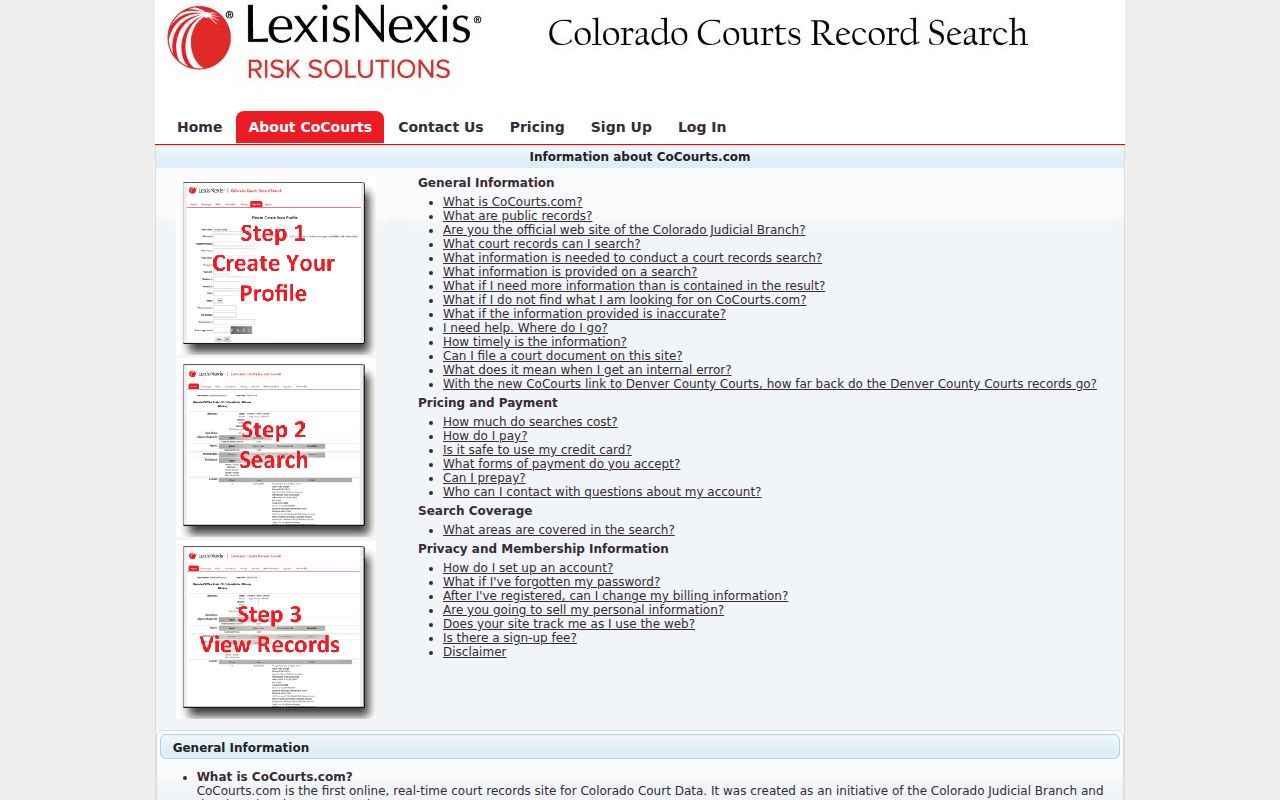
Use that data source as a lookup path, then use the Boulder court Research Department when a document copy or certification is needed.
Boulder County Court Records Search Fields
The Judicial Branch docket form requires a date and at least one more filter. A broad search can miss a Boulder County court record if the wrong court level is selected, so the courthouse and county filters matter. The Longmont combined-court location should be used when the case was set there. Name fields and case number fields are useful when available, but spelling, middle initials, and case-class abbreviations can affect results.
| Field Label | Type | Required | Notes / Format |
|---|---|---|---|
| Date | Date | Yes | The docket form requires a date for the court calendar search. |
| Judicial District | Dropdown | No | Choose the 20th Judicial District for Boulder County state court cases. |
| County | Dropdown | No | Select Boulder County to avoid statewide results from other counties. |
| Courthouse | Dropdown | No | Options include Boulder County Combined Court and Boulder County Combined Court - Longmont. |
| Party or Name | Text | No | Use participant names when the dynamic form presents name fields. |
| Case Number | Text | No | Use the exact Colorado case number if it is known. |
Types of Boulder County Court Records
Boulder County court records come from more than one court level. District Court hears civil cases in any amount, domestic relations, felony criminal cases, juvenile, probate, and mental health matters. County Court handles misdemeanors, state traffic, small claims, protection orders, felony complaints at early stages, and lower-value civil matters. Municipal courts handle city ordinance cases, municipal traffic, parking, photo enforcement, animal violations, and local misdemeanors inside city limits.
The Boulder County Clerk and Recorder PublicSearch system is not the court case-record system. It is useful for recorded documents, liens, deeds, and marriage or civil-union license records, while pleadings, judgments, criminal case files, probate entries, and divorce case files are court records. The distinction matters when a name change, judgment lien, or marriage-related record touches both court and recording systems.
- Civil records can include complaints, answers, motions, orders, judgments, garnishment papers, and satisfaction entries.
- Criminal records can show complaints or informations, advisements, bond, pleas, motions, disposition, sentence, probation, and restitution.
- Domestic relations records may include petitions, decrees, parenting plans, support orders, and restricted financial filings.
- Probate records can include petitions, wills, letters, inventories, accountings, guardianship reports, and closing documents.
- Traffic records can show citation number, offense, plea or payment status, court date, disposition, fines, costs, and points issues.
- Juvenile, mental health, adoption, and protected-party records are not open in the same way as ordinary civil records.
What Boulder County Court Records Show
A Boulder County court record is usually a mix of index data, docket events, hearing information, and filed documents. The public-facing docket may show the case number, court location, hearing date, and event type, while motions, orders, sentencing documents, decrees, and transcripts may require a separate copy request. A public online result should not be treated as the full case file. It is often the map that points to the custodian and the case identifiers needed for the request.
| Field | What It Shows |
|---|---|
| Case Number | The unique Colorado case identifier, often using a year and case class such as CR, M, T, CV, DR, PR, JD, or JV. |
| Case Class | The category of the matter, such as criminal, traffic, civil, domestic relations, probate, juvenile, small claims, or protection order. |
| Court Location | Boulder County Combined Court or the Longmont combined-court location. |
| Division or Judge | The division number and judicial officer assigned to hearings and orders. |
| Parties | The People, plaintiff, petitioner, defendant, respondent, protected person, estate, ward, or interested persons. |
| Docket Events | Filings, hearings, continuances, pleas, orders, trial settings, sentencing, closure, and related case movement. |
| Disposition | The current or final outcome, such as dismissed, guilty plea, judgment entered, decree entered, closed, transferred, or sealed. |
| Financial Fields | Fines, court costs, restitution, bond, payments, collections, and satisfaction entries where applicable. |
Public Access Framework for Boulder County Court Records
Colorado court records are governed first by court access rules, especially CJD 05-01 and the Judicial Branch public records access guide. The Colorado Open Records Act, C.R.S. § 24-72-201 et seq., is important for Colorado government records, but court case records follow court-specific rules. Criminal justice records can also involve the Criminal Justice Records Act and custodian discretion.
Boulder County court record requests for copies or unseen documents should go to the 20th Judicial District Research Department, not the county recording office. Requests should include the case number if known, party names, approximate filing year, record type, and whether certification is needed. For sheriff investigative records, jail records, CAD records, mugshots, or body-worn camera footage, use the Sheriff Records process instead of the court clerk.
The research manifest image from the Colorado Revised Statutes access page supports the statute references used for Boulder County court records access and sealing limits.
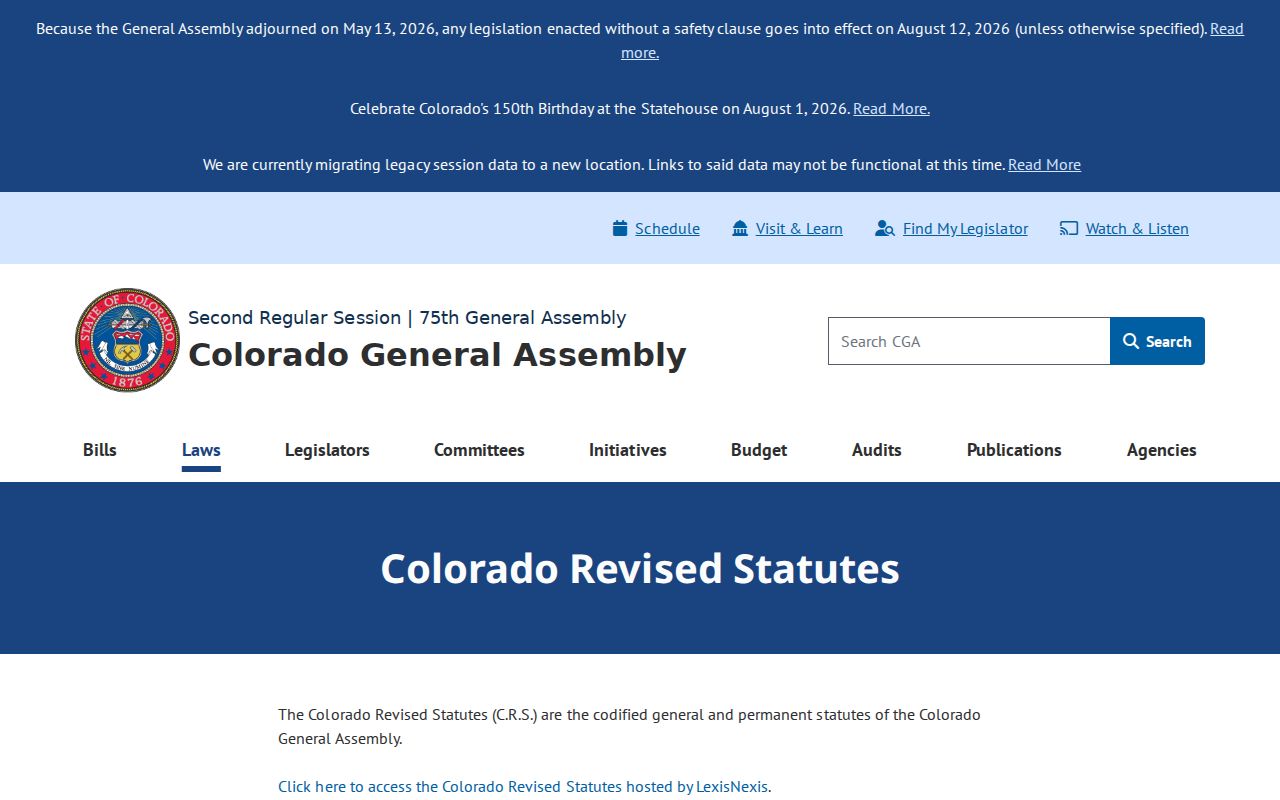
Those statutes work with Colorado court directives, so the court custodian can still redact or withhold restricted details.
Note: Online docket access can identify a case, but it does not guarantee free access to every filed document.
Restricted Boulder County Court Records
Some Boulder County court records are partly public, while others are sealed, confidential, or redacted. Juvenile matters, adoption records, mental health proceedings, protected addresses, Social Security numbers, financial account numbers, minor names, victim information, and medical information can be withheld. Protection-order cases may have public docket activity while protected-party details and addresses remain restricted by rule or order.
Criminal sealing in Colorado depends on the record type and outcome. Arrests with no charges, complete dismissals, acquittals, completed diversion agreements, completed deferred judgments, and some convictions may have specific sealing paths. Some records may be sealed automatically under Colorado law, while others require a motion or petition through the court. The 20th Judicial District Clerk's Office is the local filing point for Boulder County court sealing requests.
The manifest capture from CourtListener is included because the image file was assigned to this court records page for broader docket research context.
Federal docket sources do not replace Boulder County court custodians, especially when a certified state court record is required.
In-Person Court Record Requests
In-person Boulder County court records requests go through the Boulder County Combined Court clerk counter when a direct visit is needed. The building handles District Court and County Court case filing, records requests, jury functions, collections, and court resource center help. The Clerk's Office is open Monday-Friday, 8:00 a.m.-4:00 p.m., while the building is open Monday-Friday, 8:00 a.m.-5:00 p.m. For a more efficient request, bring the case number, party names, case type, approximate year, and a clear statement of whether plain copies or certified copies are needed.
Boulder County Combined Court Research Department
1777 6th Street
Boulder, CO 80302
720-664-1468
20recordsrequest@judicial.state.co.us
Research Department: Monday-Friday, 8:00 a.m.-5:00 p.m.
For court dates rather than copies, use Boulder County court dockets. For a case-file view focused on charges, pleas, disposition, and sentence, use Boulder County criminal court records.